
Table of Contents
Introduction
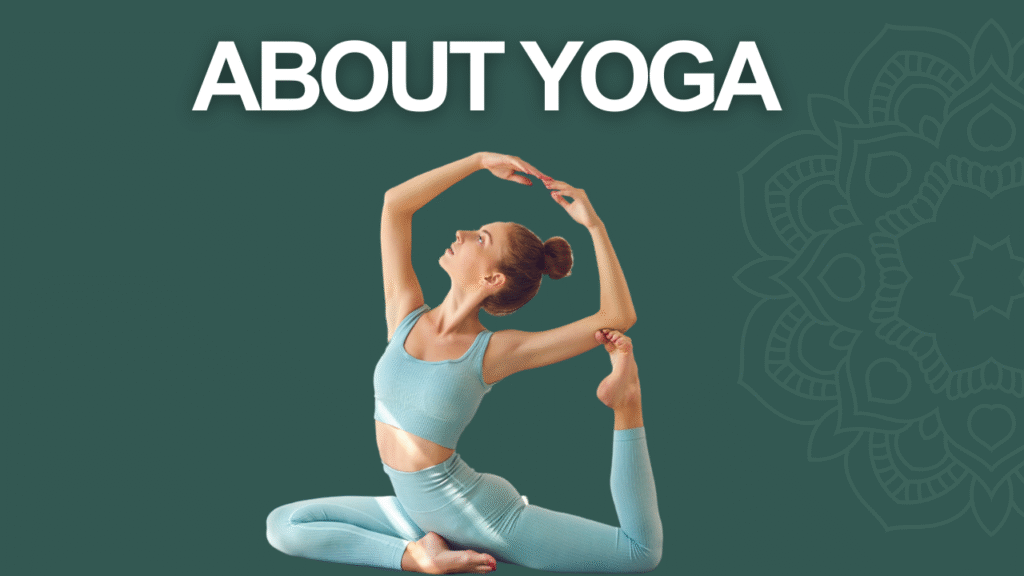
What is yoga? Beyond the pose
You may envision intricate poses on Instagram when you hear the word “yoga.” However, yoga is a profound philosophy that was developed in ancient India with the goal of bringing the mind, body, and spirit together. The Sanskrit word “yoga” is yuj, which means “to yoke” or “unite.” It is about harmony—between yourself and the outside world, between your thoughts and your actions, and between your breath and your movement.
Yoga isn’t a workout, in contrast to current fitness fads. It is a set of tools for inner peace, clarity, and resilience that lasts a lifetime. Research shows that it increases the calming neurotransmitter GABA by 27% and decreases the stress hormone cortisol by 30% (Journal of Alternative Medicine).
The Roots: Yoga’s Indian Legacy
The history of yoga is recorded in Indian spiritual texts:
- The earliest references to yogic principles can be found in the Vedas (1500 BCE).
- The eight-fold path was defined in Patanjali’s Yoga Sutras (200 BCE) (more on this later!).
- Asanas, or physical postures, were made popular by Hatha Yoga Pradipika in the fifteenth century CE.
Fun Fact: In 2015, India’s Prime Minister Narendra Modi helped the UN designate June 21 as International Yoga Day!
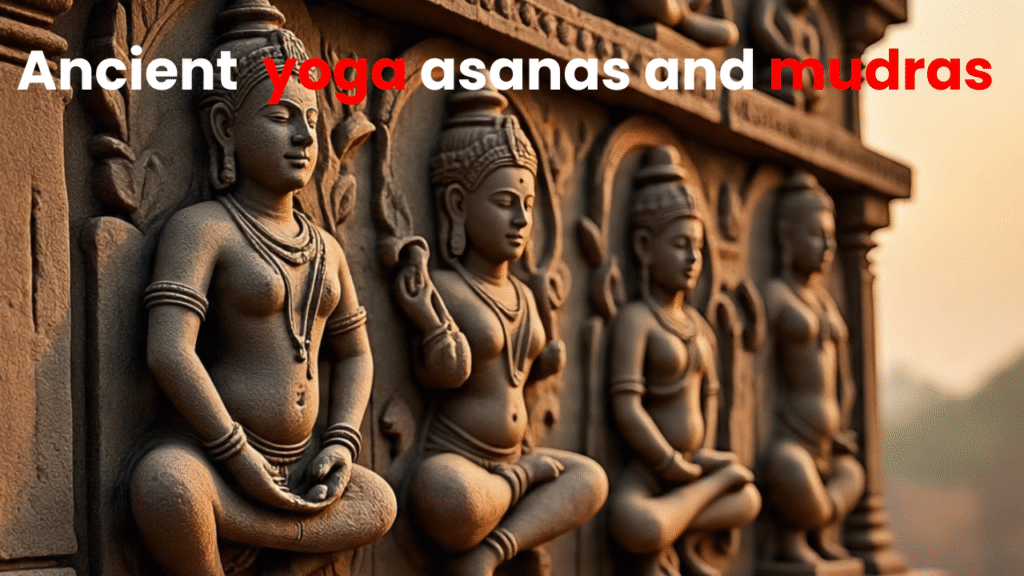
The 8 Limbs of Yoga: Your Blueprint for Wholeness
The foundation of yoga is Patanjali’s system. Imagine it as an eight-branched tree:
- Yama: Moral commitments (non-violence, honesty).
- Niyama: Self-control (tidiness, satisfaction).
- Asana: Postures (just one of eight limbs!).
- Pranayama: Control your breathing.
- Pratyahara: Sensational withdrawal.
- Dharana: Focus.
- Dhyana: Stillness.
- Samadhi: Knowledge.
Key Takeaway: While #3 is frequently the focus of modern yoga, integrating all limbs leads to true transformation.
Different Types of Yoga: Find Your Fit
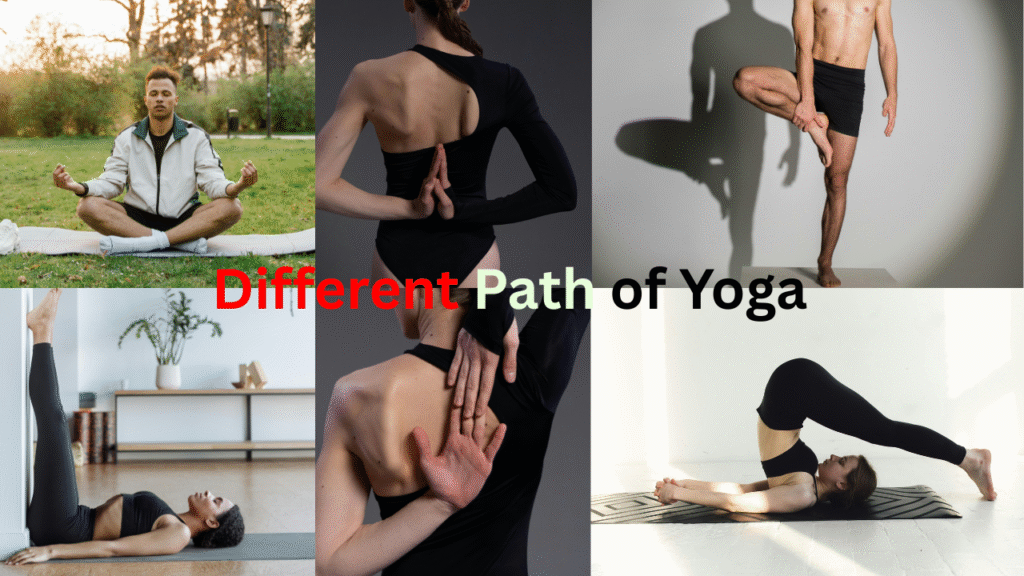
Yoga changes to fit your individuality:
- Hatha: Excellent for novices (slow-paced poses).
- Vinyasa: A dynamic “flow” that connects movement and breath.
- Kundalini: Chanting and breathwork are used to awaken energy.
- Bhakti: Prayer and mantras as a means of devotion.
- Karma: Selfless deeds, like volunteering.
Best mat for yoga https://shorturl.at/1vEzP
Benefits Supported by Science: Why More Than 300 Million People Practice
Physical Health:
- Heart Health: Reduces cholesterol and blood pressure (American Heart Association).
- Strength & Flexibility: According to an NIH study, yoga improves balance by 40% after 12 weeks.
- Pain Relief: Better than physiotherapy at reducing chronic back pain (Annals of Internal Medicine).
Mental Wellness
- Depression and Anxiety: Yoga Combines Exercise and Therapy (Harvard Review).
- Focus Boost: According to an AIIMS Delhi study, schoolchildren who practice yoga score 20% higher on exams.
Spiritual Growth
- Inner Peace: Provides “mental space” to react to stress rather than react to it.
Beginner’s Roadmap: Start in 5 Steps
Gear Up:
- A non-slip mat costs between ₹500 and ₹2000.
- Comfortable clothing (no expensive labels required!).
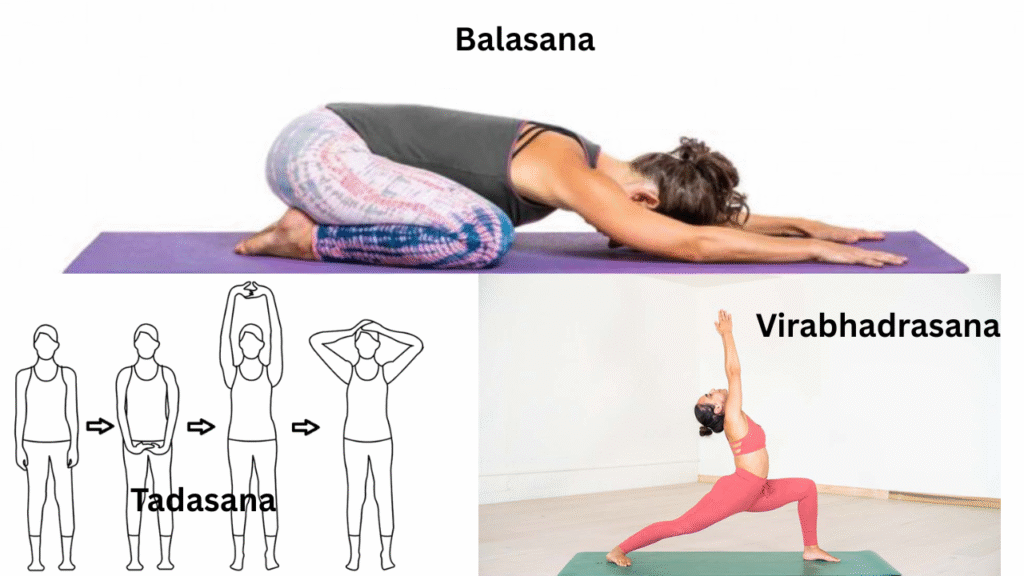
Learn 5 Foundational Poses:
- Tadasana, or mountain pose, helps with posture.
- Balasana, or Child’s Pose, helps you catch your breath.
- Strengthens the legs with Warrior II (Virabhadrasana II).
- Breathe Correctly: Spend five minutes each day practicing diaphragmatic breathing.
Consistency > Perfection: Start with 10 mins daily!
Busting Myths: "I Can’t Do Yoga Because..."
- “I’m not flexible!” is a myth.
Truth: Yoga builds flexibility—start where you are! - Myth: “It’s religious.”
Truth: Yoga is a philosophy; adapt it to your beliefs. - Myth: “Only for the young.”
In actuality, the oldest yoga instructor in the world was Tao Porchon-Lynch, who was 92 years old.
Deepening Your Practice: Next-Level Tips
- Take Part in a Retreat: Visit Kerala’s beach ashrams or Rishikesh, the “Yoga Capital of the World!”
- Read Autobiography of a Yogi or Indian Classics: Light on Yoga by B.K.S. Iyengar.
- Utilize apps such as Cult.Fit or Down Dog to monitor your progress.
Conclusion:
Yoga is about learning on the way down, not about touching your toes. This age-old Indian science provides ageless tools for finding purpose, health, or peace. According to the Bhagavad Gita:
“Yoga is the journey of the self, through the self, to the self.”